 Canadian Owned & Operated
 Canadian Owned & Operated
Posted on February 11, 2026
Patient transfers are one of the most physically demanding tasks in healthcare settings. Repeated lifting, repositioning, and support place constant strain on caregivers while increasing the risk for patients. Over time, those demands affect staff health and the overall quality of care.
Ceiling lifts in healthcare environments address these challenges at a structural level. By supporting safe, consistent transfers through overhead systems, they reduce physical load on staff and create a more controlled experience for patients. The result is a safer, more efficient care environment built to support both people and processes.
This article explores how ceiling lifts improve caregiver safety, streamline daily workflows, and enhance patient comfort in healthcare facilities.
Traditional patient transfers rely heavily on caregiver strength and coordination. Even with proper technique, repeated manual lifting places stress on shoulders, backs, and joints.
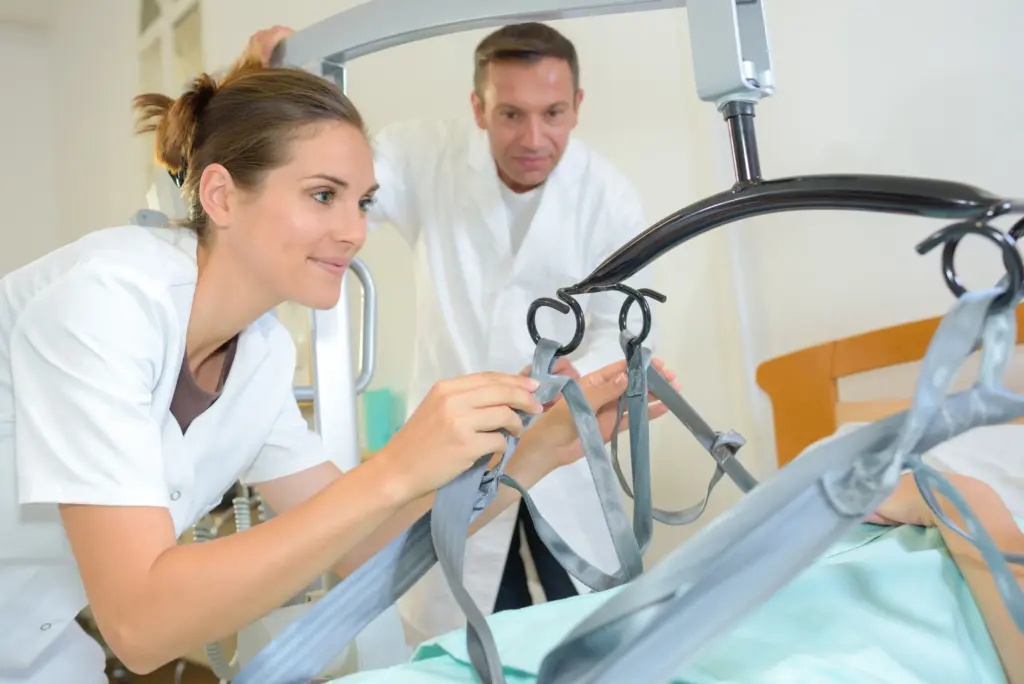
An overhead track allows the lift to support the patient’s full weight during transfers between beds, chairs, stretchers, or toilets. Movement stays controlled and predictable, which reduces sudden shifts that often cause strain or imbalance. Staff can focus on the comfort of the patients rather than managing the weight of the individual.
Remember that transfers often occur dozens of times per shift, which means ceiling lifts in healthcare can make a huge difference quickly. Caregivers experience less cumulative strain, fatigue is reduced, and the risk of injury drops because each transfer follows the same controlled pattern instead of relying on individual strength or improvisation.
Healthcare organizations have invested heavily in lift training, body-mechanics education, and safety reminders. While those efforts help, they don’t change the physical reality of frequent patient handling. Repetitive strain injuries often develop gradually, even when caregivers follow recommended techniques.
Ceiling lifts in healthcare environments address this problem through design. By removing the need to manually bear weight during transfers, they reduce cumulative stress on the musculoskeletal system.
Facilities that treat ceiling lifts as part of their infrastructure, rather than optional equipment, tend to see improvements in injury rates, sick leave, and staff longevity, especially in units with high transfer frequency.
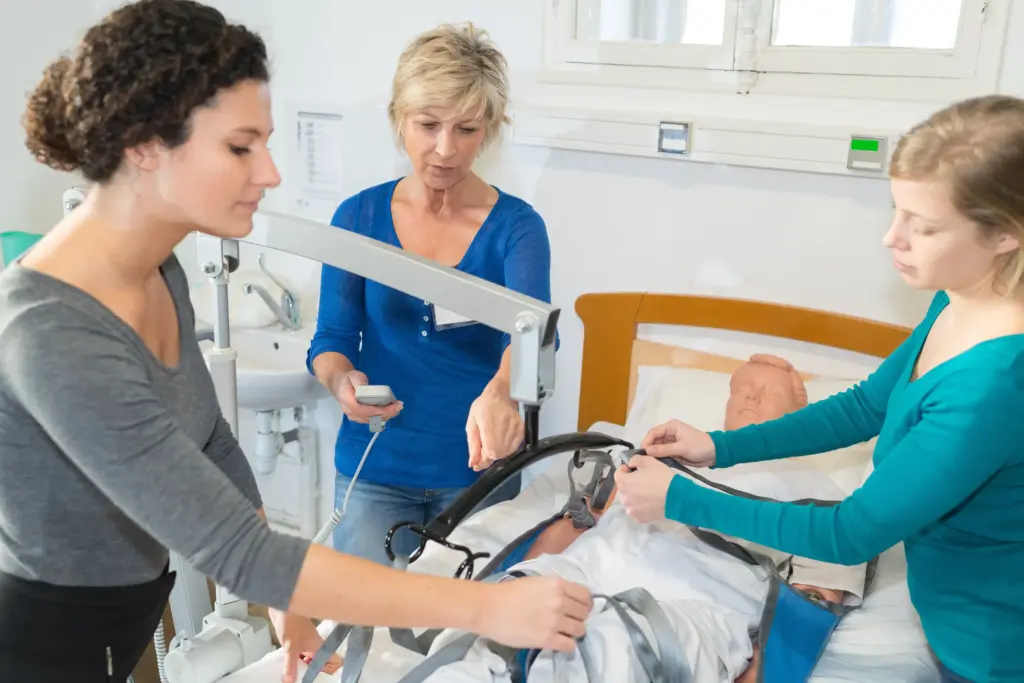
Selecting ceiling lifts in healthcare settings requires more than choosing a lift model off a spec sheet. Each facility has different patient populations, care routines, and physical constraints, and those factors should guide the decision.
System type is the first consideration. Fixed ceiling lifts operate on permanent track systems and support frequent, high-volume transfers. Portable units offer flexibility, allowing a single lift motor to move between rooms or tracks, which can be useful in facilities with varied or lower transfer demand. The right choice depends on how often transfers occur and how many rooms require coverage.
Weight capacity planning matters early. Standard ceiling lifts typically support a broad range of patients, but some environments regularly care for bariatric patients. In those cases, higher-capacity systems should be planned from the outset to avoid future limitations or costly upgrades. Most lifts offer a standard weight capacity between 300 and 450 pounds, with some boasting upper limits of 1000 pounds.
Lift range and vertical travel. Lift range and vertical travel directly affect how usable a system is day to day. Ceiling lifts differ in how low they can reach and how high they can lift, which matters for everything from assisting someone up from the floor to transferring from high mattresses or specialized therapy equipment.
Sling selection directly affects comfort and safety. Sling fit depends on patient height, body shape, weight distribution, and mobility level. Facilities often need multiple sling types to accommodate different clinical needs, and selecting compatible systems upfront simplifies ongoing care.
Track layout influences workflow. Ceiling track systems determine where transfers can happen and how easily staff can move patients between locations. Thoughtful track planning allows lifts to serve beds, chairs, toilets, and therapy areas without unnecessary repositioning or manual handling.
Built-in safety features are essential. Modern ceiling lifts include controls and safeguards designed to support safe transfers even in unexpected situations. Emergency stop functions, backup power indicators, and secure attachment mechanisms contribute to confidence for both caregivers and patients.
When facilities work with experienced accessibility providers like HME, these planning factors are typically reviewed together rather than in isolation. That holistic approach helps ensure ceiling lifts in healthcare environments support safety, efficiency, and adaptability over the long term.
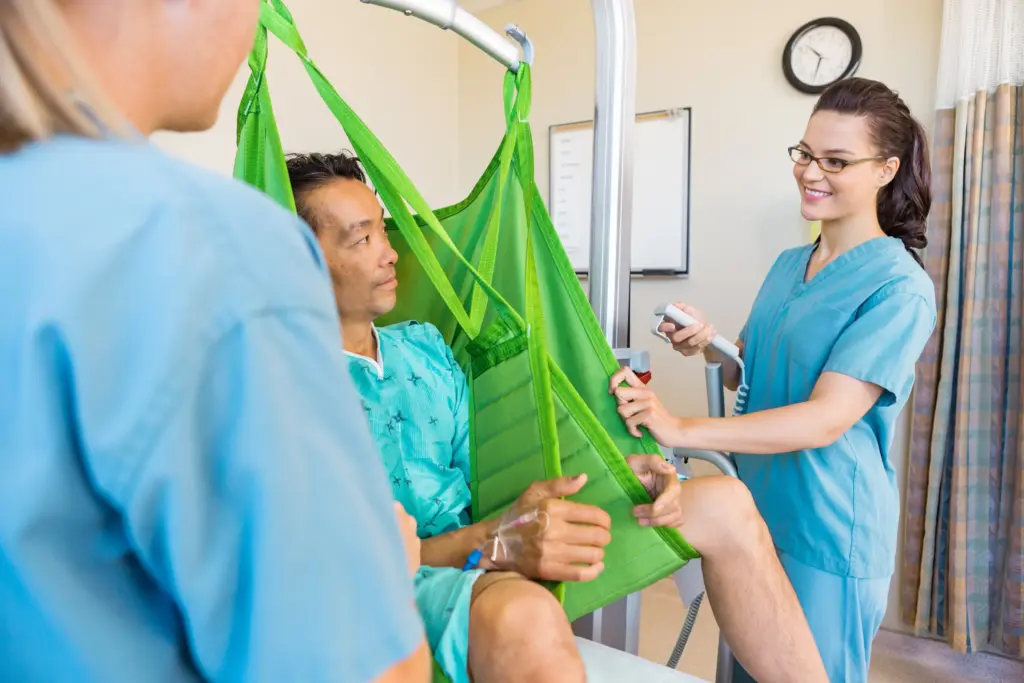
For patients, transfers can be one of the most stressful moments of care. Loss of balance, sudden movements, and reliance on multiple caregivers can create anxiety, especially for individuals with limited mobility or cognitive challenges. Ceiling lifts in healthcare settings help reduce that stress by providing smooth, controlled movement that feels predictable and secure.
Because the lift supports the patient’s full weight evenly, transfers tend to feel steadier and less rushed. Proper sling selection plays a major role here, as well-fitted slings distribute pressure comfortably and maintain appropriate positioning throughout the movement. This consistency helps patients feel supported rather than handled, which can improve cooperation and overall comfort.
Dignity is also influenced by how transfers fit into daily routines. Ceiling lifts allow caregivers to complete transfers efficiently and calmly, without repositioning equipment or calling in additional staff. That efficiency minimizes exposure, reduces time spent in vulnerable positions, and supports a more respectful care experience for patients.
Beyond safety and comfort, ceiling lifts in healthcare environments change how care teams move through their day. Transfers that once required two or three staff members can often be completed by one caregiver, freeing others to focus on patient care instead of coordinating lifts. That shift reduces interruptions, improves response times, and helps units stay on schedule during busy shifts.
Because ceiling lifts are always in place, staff don’t need to locate, move, or position mobile equipment between rooms. Transfers become part of the natural workflow rather than a separate task that disrupts routines.
For administrators, these gains show up in quieter ways: fewer delays, less congestion in patient rooms, and care routines that feel more predictable. Ceiling lifts in healthcare settings support efficiency not just by speeding people up, but by removing friction from one of the most demanding parts of daily care.
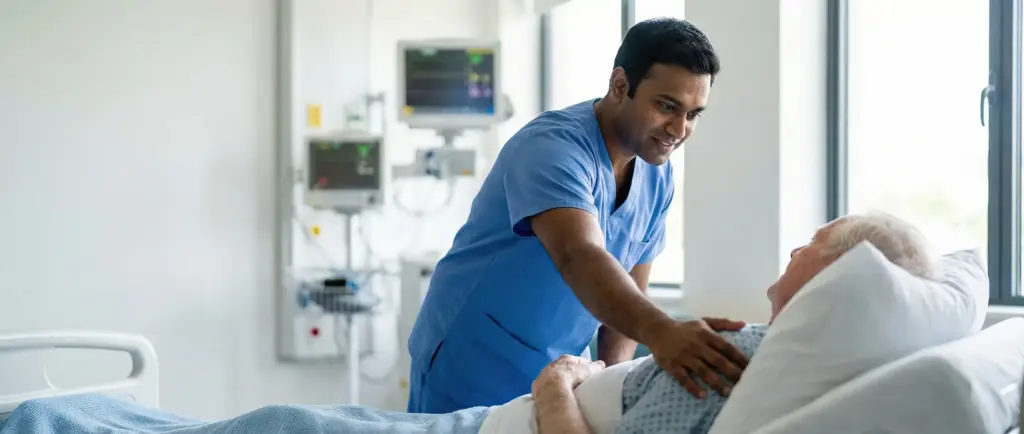
Ceiling lifts in healthcare facilities address multiple challenges at once. They reduce physical strain on caregivers, support dignified and comfortable patient transfers, and create more efficient care routines across units.
Working with experienced accessibility providers like HME helps healthcare teams assess their spaces and implement ceiling lift solutions that support staff and patients every day. Reach out, let’s start the conversation.